


Wall

Wall

100% earth
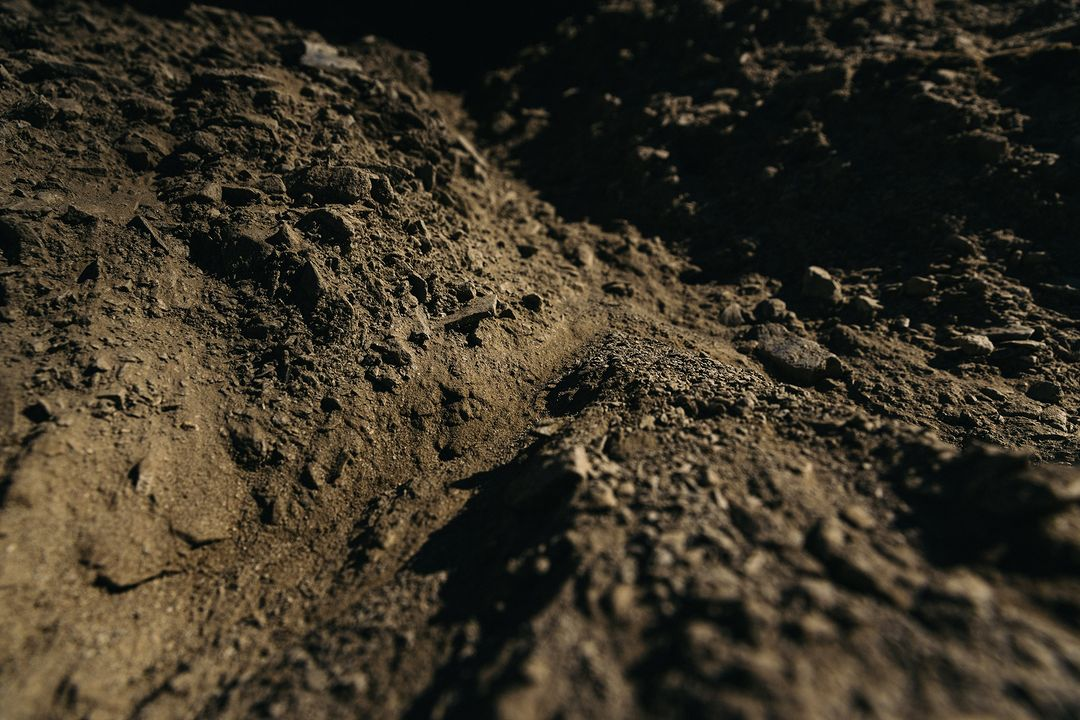
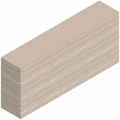
All our rammed earth products are made from 100% earth - without any cement or chemicals. This means that the building material is free of harmful substances, water-soluble and fully recyclable. We mainly use excavated material from the excavation site or the region for production.
Shape
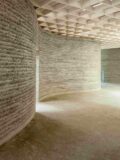
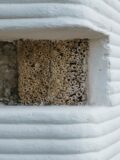
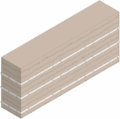
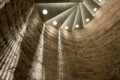
Our rammed earth walls are not limited to simple, straight surfaces. Edges, projections or niches as well as curved shapes can also be designed, offering a wide range of possibilities for distinctive spaces and unique architectural details.
Erosion
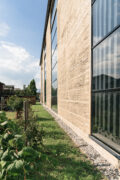
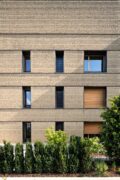
If our rammed earth walls are exposed to the weather, calculated erosion is to be expected. Calculated erosion means that the surface changes over time. This transformation is part of the design process and does not pose any structural disadvantage.
Honest, powerful, versatile

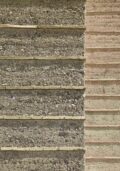
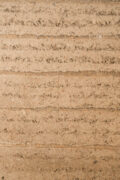
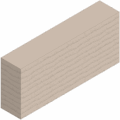
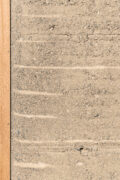
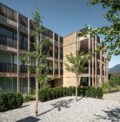
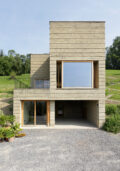
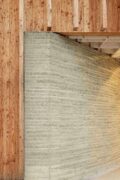
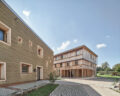
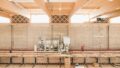
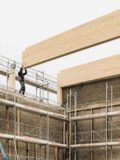
Shuttered and compacted on site or produced as prefabricated elements – our walls made of 100% earth combine traditional construction with contemporary architecture. Designed to be load-bearing or self-supporting, they meet the highest building physics requirements. The input of human and mechanical compaction energy becomes visible in the characteristic layering. Haptics and honesty of the material make each rammed earth wall a unique piece.

Properties

Rammed earth can withstand high loads and is suitable for load-bearing exterior and interior walls. Thanks to its thickness and density, it can be used as a fully functional structural element in different construction systems, as well as for non-load-bearing façade cladding.


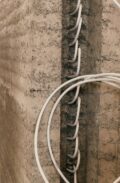
Due to its high mass, rammed earth can store heat and release it back into the room over time, thereby balancing out the temperature. This effect can be controlled by incorporating heating pipes. At the same time, rammed earth can absorb moisture from the air very quickly and release it again, which has a positive effect on the indoor climate.

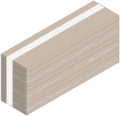
Calculated erosion is considered a natural process in the planning stage, particularly for weather-exposed façade surfaces. Erosion brakes in the form of trass lime or brick strips are specifically used to control material loss. While this change to the clay surface emphasises the natural character of the material, it is often more of a psychological than a technical problem.

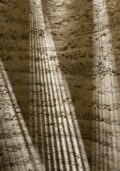
Rammed earth walls are characterised by their textured surface, which can be fine or coarse depending on the formwork system used and the processing method employed. By adding coloured clays, colour nuances can be precisely controlled. Artistic interventions, such as layering or handcrafted inlays, give each wall a distinctive, expressive quality.


Rammed earth walls are not limited to flat, minimalist shapes. Through individually crafted formworks, complex geometries, rounded edges, niches, and curved shapes can also be realized. This creates spatial qualities and architectural details that that fully exploit the design possibilities of rammed earth.


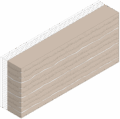
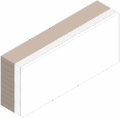
Due to its high mass, rammed earth requires additional insulation to meet European energy efficiency requirements. This insulation layer can be installed internally, externally, or as core insulation. It is preferable to use vapour-permeable materials that can buffer moisture. To avoid air pockets, the insulation must be installed without joints.


Figures, data, facts*

Medium compressive strength

2.4-4 N/mm²

Mass

2,000-2,350 kg/m³

Wall thickness

25-85 cm

Rated sound reduction index

53 dB from 20 cm wall thickness

CO2 emissions from production

46 kg/m³

Production energy

930 MJ/m³

Creep dimension

0,2 %

Thermal expansion

0.005 mm/(m-K)

*All data is based on experience and is for guidance only; EPD data is in progress.
Show more

Erosion

Calculated erosion is taken into account as a natural process in the planning, particularly on façades exposed to the weather. Erosion brakes in the form of trass-lime mortar or ceramic tiles are used specifically to control material loss.

Ceramic tiles are installed successively during the ramming process. With the help of a thin wooden shim in the formwork, these tiles can be inserted protruding the main face of the wall.

Trass-lime mortaris scattered in layers during the ramming process. It consists of an earth-moist sand mixture stabilized with the trass-lime powder.

Interior walls and fully weather protected exterior walls do not require erosion brakes.

Insulation

InsulationOur rammed earth walls can be easily combined with conventional insulation materials. It isimportant that these are vapor-permeable and connected to the rammed earth with minimal air gaps.We also offer individually integrated core insulation for specific thermal requirements. 


The interior insulation should be fully bonded with clay mortar to ensure vapor permeability. The interior surfaces can be enhanced with wall heating systems and clay plasters.

For exterior insulation, all conventional insulation systems are possible. The rammed earth wall is strong enough to use mechanical fixtures.

Core insulation is a more complex matter and must be considered individually for each project.

Why rammed earth walls make an impact

Passive climate regulator

In interiors, rammed earth walls provide a pleasant indoor climate in a natural way. Their high heat storage capacity balances temperature fluctuations between day and night. At the same time, the earth regulates the humidity, creating a human-friendly level of around 55%.

Acoustics

Rammed earth has positive acoustic properties. Its natural "softness" contributes to both sound insulation and sound absorption. This makes it ideal for interior partition walls or noise protection measures in outdoor areas.

Logistics & Resources

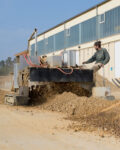
We have been pushing ahead with the implementation of rammed earth projects for decades and have expanded its applications to include prefabricated elements. Production in our workshop or in a field factory on-site offers a high degree of schedule and weather reliability. Transport routes and local resources must be evaluated on a project-specific basis.

Natural touch

The carefully compacted rammed layers esemble geological strata, with each layer telling its own story. This unique structure conveys a sense of calm and comfort, highlighting the authenticity of the material.

Seamless

All our rammed earth products are made from 100% earth - without any cement or chemicals. This means that connections and joints can be repaired repeatedly using the same base material and the same quality. The result is a monolithic structure, which offers significant added value, especially when combined with our prefabrication approach.

Recyclable

Our material is water-soluble. This water solubility is the greates virtue of our rammed earth. It ensures infinite recyclability and optimal separation of components at any time. It also offers advantages in terms of maintenance and repair.
Show more

How is a project realized?

For us, rammed earth is not just a product – it is a process of developing the right solution for a project with everyone involved. That’s why we accompany this process: from initial consultation to production and final acceptance. Together, we select the appropriate services to realize the desired rammed earth applications with the highest quality and craftsmanship.


1
Request
2
Initial consultation
3
Optional: Feasibility study
4
Specialist planning
5
Proposal
6
Commissioning
7
Work planning & implementation
8
Production
9
Drying
10
Assembly & retouching work
11
Acceptance
1
Request
In order to provide a thorough assessment of a rammed earth project, we welcome the submission of plans, sketches, and project details to info@lehmtonerde.at. The more information we receive, the more precisely we can assess a project.
2
Initial consultation
After examining the project, we work together to determine the appropriate level of support and outline the next steps.
3
Optional: Feasibility study
The feasibility of a rammed earth project is assessed in order to create planning security and realistic implementation prospects.
4
Specialist planning
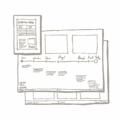
The specialist planning supports the project by coordinating, for example, basic connection details as well as structural and scheduling interfaces with other trades.
5
Proposal
As soon as a service description has been defined, we prepare a quotation for the rammed earth work.
6
Commissioning
Once a project has been commissioned, it moves from specialist planning to to detailed workshop planning and execution.
7
Work planning & implementation
Thorough workshop planning lays the foundation for a successful project execution. Close collaboration with project management and production is ensured.
8
Production
The rammed earth elements are either rammed on-site, produced in a field factory or prefabricated in our workshop in Schlins.
9
Drying
Due to the low moisture content of rammed earth at around 8%, no additional energy is required for drying. Depending on the wall thickness, this natural process takes approx. 4-6 weeks.
10
Assembly & retouching work
Installation is carried out in close coordination with the construction process. Thanks to the special properties of our rammed earth, connection and element joints can be designed to blend seamlessly with the surface, becoming virtually invisible.
11
Acceptance
Upon project completion, a usage agreement is drawn up, which also provides the option to conclude a maintenance contract.
Show more Show less

Related Storys

Rammed earth wall