



Floor

Floor

Fine tuning
Our rammed earth floors are individually treated and impregnated with wax as part of the surface finishing process. This creates an easy-care, hard-wearing surface that retains its natural beauty for a long time.
100% earth
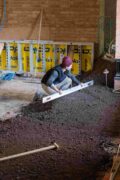
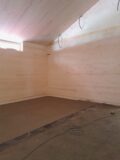
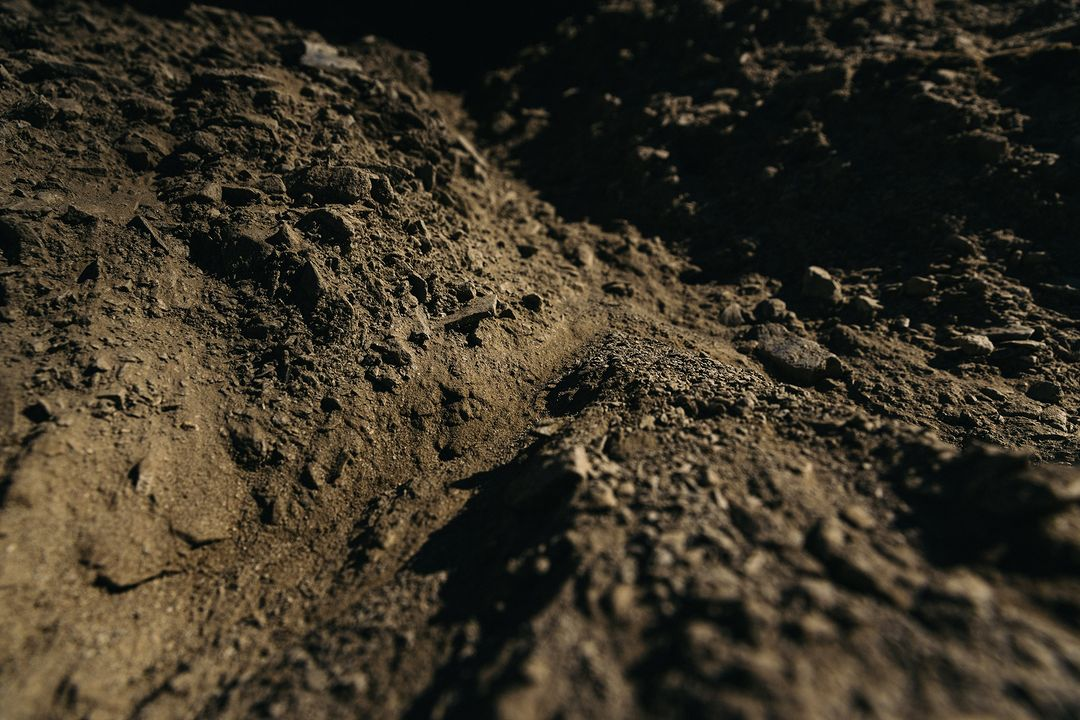
Our rammed earth mixture is always piled up in a single layer on a load-bearing substrate and compacted by machine to form a seamless, robust floor surface made of 100% earth.
Heating system
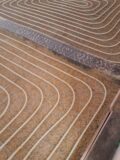
Our rammed earth floors are often combined with underfloor heating systems. The heat transfer is gentle and ensures comfort.
Refined rammed earth

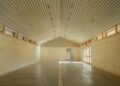
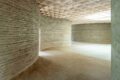
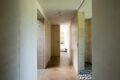
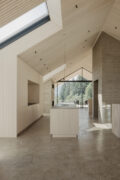
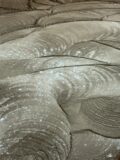
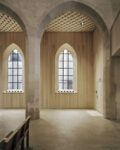
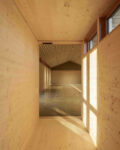
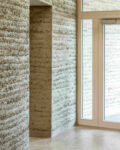
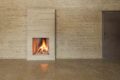
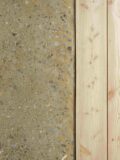
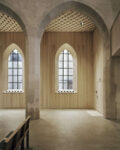
Our rammed earth floors made from 100% earth combine precision craftsmanship with responsible use of resources. The heterogeneous, natural surface with fine micro-cracks gives the floor a timeless aesthetic despite its hardness. Compacted in layers and carefully worked, the result is a robust surface. The clay floor can be customized with different clay mixtures and finishes such as dimamant sanding. Impregnated with wax and polished, rammed earth floors are hard-wearing and easy to maintain.

Properties

Due to its high specific weight, rammed earth can store heat and release it back into the room with a time delay – it therefore has a balancing effect. This effect could be controlled by integrated heating pipes.

Our rammed earth floors are mainly determined by the geological composition of the soil used. We mainly use excavated material from the excavation pit or the region for production. The originality of our work steps requires a high level of craftsmanship – it is not for nothing that the production of a good rammed earth floor is referred to as the supreme discipline.

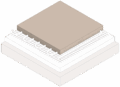
Various insulation systems can be used under the rammed earth floor. It is important to ensure that this insulation layer can withstand the necessary compaction pressure. The use of impact sound insulation is possible to a limited extent, but must be checked individually in detail.

Our rammed earth flooring is comparable in use to oiled hardwood flooring. The material does not contain any additives and is only suitable for use when sealed with wax. It can be swept, vacuumed and damp mopped; standing water should be avoided. Appropriate care should be taken to ensure unlimited durability.

Facts, figures and data*

Medium compressive strength

2.4-4 N/mm²

Mass

2,000-2,350 kg/m³

CO2 emissions from production

46 kg/m³

Production energy

930 MJ/m³

Thermal expansion

0.005 mm/(m-K)

Floor structure

from 6cm depending on substrate & load

*All figures are based on experience and are for guidance only; EPD data are in progress.
Show more

Why clay floors are convincing

Passive climate controller

In interiors, rammed earth floors provide a pleasant indoor climate in a natural way. Due to the material's high heat storage capacity, temperature fluctuations between day and night are balanced out.

Natural feel

Compacted, dried earth - like a smooth field floor. Especially barefoot, you feel grounded on our rammed earth floors. The gentle contact with this soil mass, its slight unevenness and fine micro-cracks, provides a haptic experience that corresponds to the human being.

Seamless

All our rammed earth products are made from 100% earth - without any cement or chemicals. This means that our rammed earth flooring is stress-free and can be laid seamlessly over an infinitely large area. Slight movements in the substructure are compensated for.

Recyclable

Our material is water-soluble. This water solubility is the best virtue of our rammed earth - infinite recyclability and optimum component separation are guaranteed at all times. It also offers great advantages in terms of maintenance and repair.

Acoustics

Rammed earth has positive acoustic properties. Its natural "softness" contributes to both sound insulation and sound absorption.

Fire protection

The thermal expansion coefficient of rammed earth is very low - it is incombustible and therefore has positive fire protection properties. Our rammed earth floors could therefore be used as a fire protection measure in a timber house.
Show more

How is a project realized?

For us, rammed earth is not just a product – it is a process of developing the right solution for a project with everyone involved. That’s why we accompany this process: from the initial consultation to production and acceptance. Together, we select the right services to realize the desired earth building applications with the highest quality and precision craftsmanship.

1
Request
2
Initial consultation
3
Get to know
4
Specialist planning
5
Quotation preparation
6
Installation on site
7
Drying
8
Surface finish
9
Acceptance
1
Request
In order to be able to make a well-founded assessment of a rammed earth project, we would be pleased to receive planning documents, sketches and project details at info@lehmtonerde.at. The more information we receive, the more precisely we can assess a project.
2
Initial consultation
After examining the project, we work together to determine the extent to which support is appropriate and what the next steps could be.
3
Get to know
Rammed earth floors are not commonplace and many people are still unfamiliar with them. It is therefore important to provide users with comprehensive information about the advantages and disadvantages after the initial consultation. We always recommend visiting projects that have already been completed by other customers in order to gain a vivid picture of the material, effect and suitability for everyday use.
4
Specialist planning
Once the desire for a rammed earth floor has been confirmed, the relevant specialist planning begins, in which the structure and logistical parameters are examined in detail and advice is given.
5
Quotation preparation
As soon as a performance specification has been defined, we prepare a cost estimate or a binding offer for the execution of the clay floor.
6
Installation on site
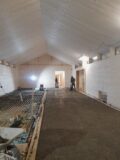
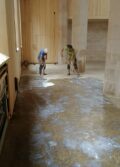
The processed rammed earth material is delivered to the construction site loose or in big packs, piled up over a large area and compacted.
7
Drying
Due to the low installation moisture content of rammed earth at approx. 8%, the soil dries out relatively quickly. During this time, the soil should not be used much or should be protected during further construction work.
8
Surface finish
After drying, usually 3-5 weeks, the surfaces are finished in several work processes with sanding and wax coating.
9
Acceptance
When the project is accepted, a usage agreement is drawn up, which also offers the option of concluding a maintenance contract.
Show more Show less