




Chapel of Reconciliation
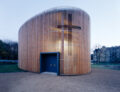
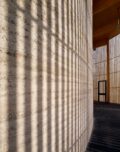
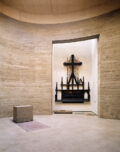
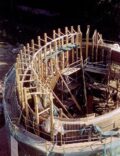
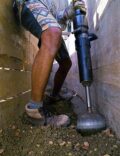
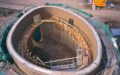
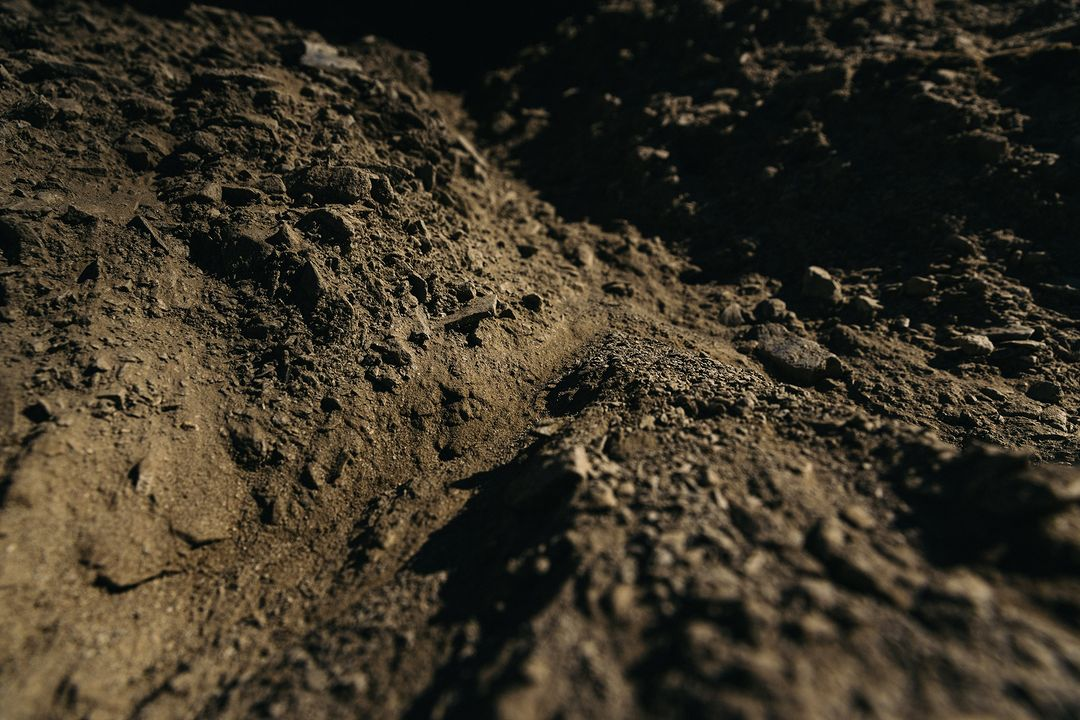
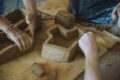
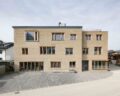
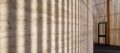
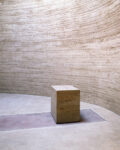
According to Berlin architects Peter Sassenroth and Rudolf Reitermann, the Chapel of Reconciliation was built on the foundations of the old church as a place of devotion and reflection for the local community and for visitors to the nearby Berlin Wall Memorial. Executing the construction of the core building, Martin Rauch has achieved a pioneering achievement. The 7.2m high and 60cm thick oval wall of the chapel is the first load-bearing rammed earth structure built in German in the past hundred years.
The chapel was built for the 10th anniversary of the fall of the Berlin Wall. In 1961, after the division of the city by the Wall, the old church located in the Death Strip became unreachable. In 1985 it was detonated to keep a clear field for fire management. After the fall of the Wall, the congregation was given back the property for religious practice.
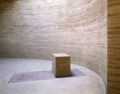
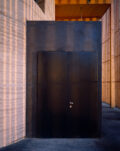
Only the area of the old choir room was built on. The site of the old church remained free. Above the exposed cellar stairs, where the remains of the door that was walled off in 1961, the niche for the preserved altarpiece was built. This new apse anchors the oval room in the axial direction of the old building. The main axis of the new cella, however, follows the east-west direction, on which the altar built by Martin Rauch also stands. The shell of wooden lamellas, which translucently encases the core building, is oriented axially towards Bernauer Strasse.
Arch. Rudolf Reitermann & Arch. Peter Sassenroth
Evangelical Church of Reconciliation Bernauer Strasse Berlin
Earth building: Martin Rauch & Lehm Ton Erde Baukunst GmbH; Earth building consultancy: Dierks, Babilon & Voigt, Dipl.-Ing. Christof Ziegert; Structural engineering: Pilchler Ingenieure; Structural work: Pegel & Sohn; Carpentry work: Loschke joinery; Metal construction work: Ferrum Metallbau